
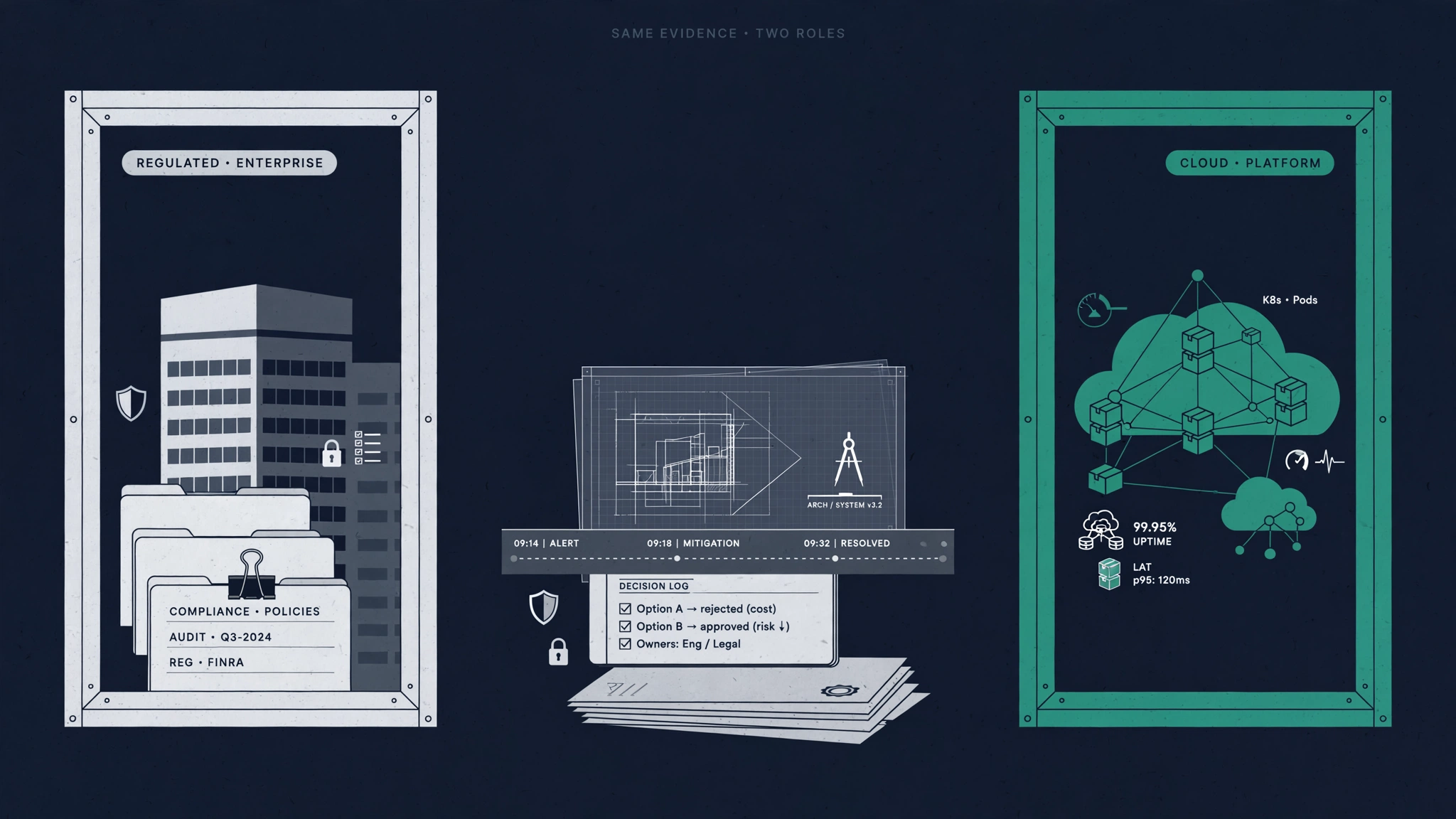
Same Senior Experience, Different Hiring Outcomes: The Role of Context
Two hiring teams review the same resume. Both see a decade of senior technical experience. Team A advances the candidate to interviews for a staff engineer role. Team B sends a polite rejection. The career history stays identical. The outcomes diverge.
This happens often in senior technologist hiring. The work exists on the page. Its hiring evidence shifts with role context. Without that lens, teams force verdicts too soon. A pile of resumes demands quick calls. A clear brief builds a working view first.
Role Context: The Missing Variable in Senior Hiring
Titles like staff engineer or principal engineer do not define roles. Company conditions do. Scope does. Constraints do. Success signals do. Senior technical experience holds no fixed meaning until the role's actual conditions take shape.
Resumes never tell the whole story. They list achievements. They omit the environment where those achievements landed. Transferable skills emerge only when matched against specific demands.
Role context names what counts. It separates central evidence from adjacent skills. Two teams read the same history. They reach different, reasonable conclusions. The brief guides one. The pile misleads the other.
What Belongs in a Role Brief
A role brief acts as the working view. It captures the reality candidates will enter. List the environment. Detail the constraints. Define the level. Outline success signals. Specify ownership.
Environment
On-prem legacy systems. Cloud-native greenfield builds. Regulated audits. Scale from 40 engineers or 4,000. These set the stage for hiring evidence.
Constraints
Blast radius limits. Change control gates. Team maturity. Budget realities. These shape how senior technical experience translates.
Level and Ownership
Staff engineer at a startup owns the full stack. At a bank, focus narrows to compliance bridges. Success signals follow: production stability, team leverage, product velocity.
Build the brief before the pile. It turns role context into a filter for transferable skills.
Illustrations: Same Evidence, Shifting Value
Illustration 1: On-Prem Production Estate
Consider an engineer who kept an on-prem production estate running. Servers hummed under tight budgets. Outages stayed rare. For a Kubernetes platform-migration role, this history proves operating production under constraint. Reliability under resource limits shines.
Shift to a regulated team locked on-prem. Audit logs, change controls, blast-radius judgment. That same history reads as direct evidence of living inside those rules. For a greenfield product cloud team, it becomes adjacent. Foundational ops knowledge supports, but cloud-native design takes center stage.
Illustration 2: Incident-Response Ownership
Now incident-response ownership. The engineer held the pager through outages. Root causes traced. Mitigations rolled out. For an SRE role, this sits core. Proactive toil reduction follows naturally.
In a staff product-engineer role, it supports judgment under fire. Sound decisions amid chaos. For an engineering-manager role, it reveals teaching moments. How they delegated the pager. How they built response muscle in others.
Illustration 3: "Staff Engineer" Across Companies
Staff engineer title. At a 40-person startup, it means owning product and infra end-to-end. At a bank, it bridges engineering and compliance silos. At a vendor platform team, it scales APIs for millions. Same title. Vastly different scope. Company conditions redefine the role.
Fit Versus Confidence: Build a Working View
Fit asks if the evidence meets the brief. Does senior technical experience align with role context? Confidence measures unknowns. Gaps in company conditions. Unclear constraints. A strong fit with high confidence rarely appears early.
Separate them. A working view notes both. It invites questions. Human judgment enters here. Tools aid pattern matching. Scope demands context. Avoid the verdict from a cold pile.
Translate Experience into Opportunity
Hiring teams gain clarity with a brief first. Review the pile through that lens. Role context reveals hiring evidence. Transferable skills snap into focus for staff engineer hiring.
Candidates see the shift too. The same resume reads against different destinations. Company conditions explain outcomes. They translate experience into opportunity.
Aptikos connects demonstrated experience, a role lens, and open questions. Write the brief. Gain the working view.
Hiring leaders and recruiters can explore employer access to set company context and review evidence against one role.